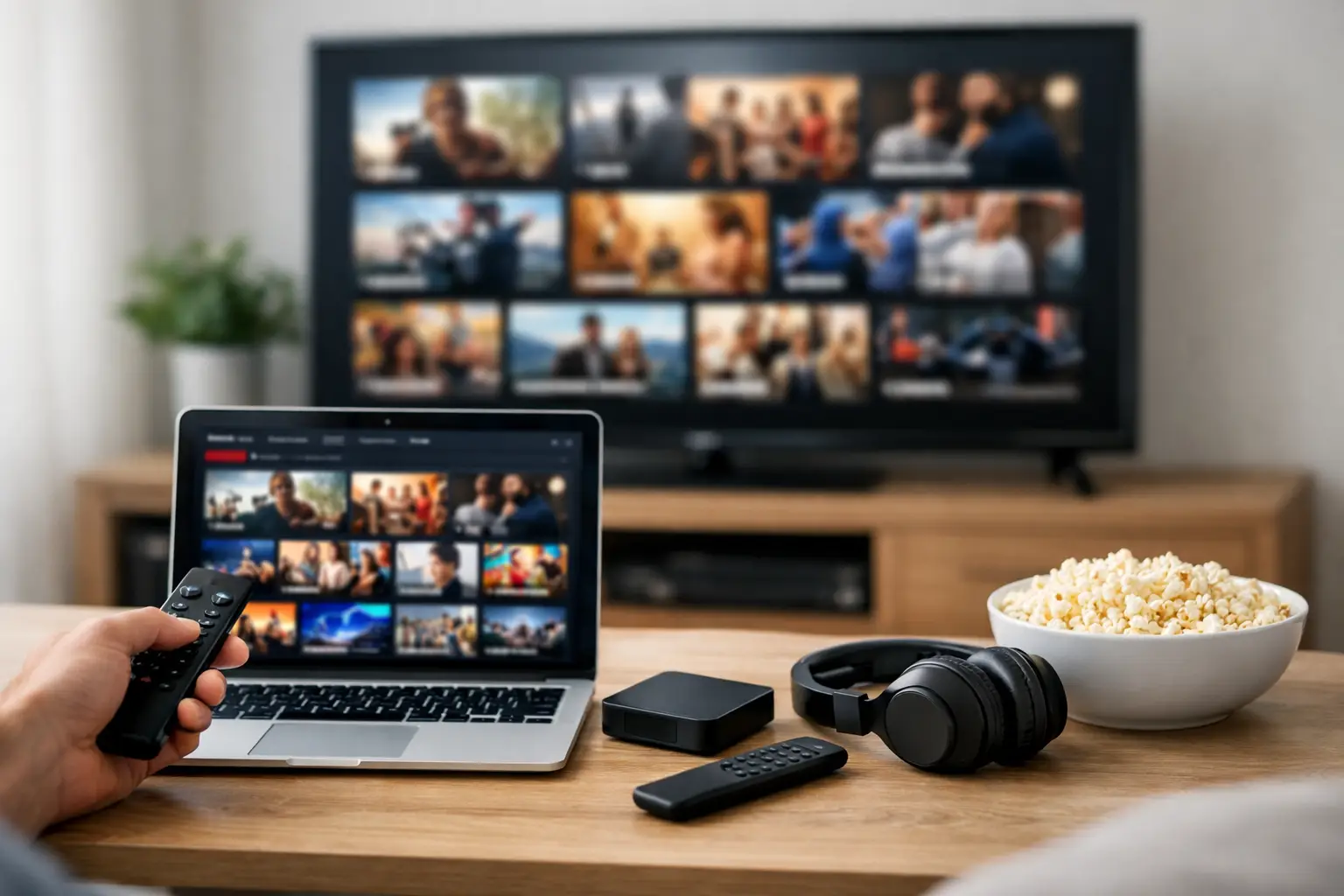
Open your TV, bounce between five apps, forget which one has the movie, then realize live sports are somewhere else entirely. That is exactly why the all in one streaming subscription has become such a strong alternative for people who are done paying more for less convenience. If your goal is simple – live TV, deep on-demand access, strong 4K support, and fewer monthly decisions – a bundled streaming model makes a lot of sense.
For cord-cutters, international households, sports fans, and heavy streamers, the real problem is not lack of content. It is fragmentation. One service has prestige shows. Another has live channels. A third has anime. A fourth has international programming. Add them all up and the monthly total climbs fast, while the experience gets worse. Too many apps, too many passwords, too many missing pieces.
What an all in one streaming subscription actually means
A true all in one streaming subscription is not just a platform with a decent movie catalog. It combines multiple entertainment categories into one account and one payment. That usually means live television, video on demand, and device-flexible access across Smart TVs, Fire Sticks, phones, tablets, and desktop setups.
The difference matters. Plenty of streaming services call themselves comprehensive, but they still leave obvious gaps. You might get a polished interface and a limited library, yet still need another subscription for sports, local-style live viewing, foreign channels, or higher-volume movie access. An actual bundled setup is built to replace stacking, not add to it.
For many buyers, the winning formula is simple: live channels for real-time viewing, VOD for convenience, and a private media-server-style experience for deeper catalog access. That combination gets much closer to how people really watch.
Why the all in one streaming subscription model is growing
The appeal is not complicated. People want more content, fewer barriers, and predictable pricing. Subscription fatigue is real because every new standalone app adds friction. Even when each platform looks affordable on its own, the combined cost often becomes hard to justify.
An all in one streaming subscription reduces that friction by consolidating the experience. Instead of switching between separate ecosystems, you get one provider handling the heavy lifting. That means a broader content mix, less account management, and a setup that works better across multiple devices in the same home.
It also fits how modern households stream. One person wants live sports, another wants documentaries, someone else wants anime, and somebody is looking for 4K remux-quality movie nights. A single narrow app rarely satisfies all of that. A broader subscription has a better chance.
What to look for before you pay
Not every bundle is built the same, and this is where trade-offs matter. A low price means very little if the channel lineup is thin, the on-demand catalog feels recycled, or streams collapse during peak hours. The strongest offers are defined by scale, consistency, and device coverage.
Content volume is the first filter. If a service claims to be all in one, it should have enough live TV and on-demand depth to replace multiple subscriptions, not just mimic one or two. That means broad channel coverage, a large movie and TV library, and support for specialized interests like international content, kids programming, anime, documentaries, and premium-quality 4K files.
Performance is the second filter. Large catalogs sound great until buffering ruins the experience. Infrastructure matters more than marketing. Buyers should care about stream stability, playback speed, server quality, and whether the service is built to handle demand at scale. A massive catalog without reliable delivery is just a long promise.
Device compatibility is next. The whole point of convenience falls apart if setup is limited or awkward. A strong service should work cleanly on major streaming devices and operating systems, especially Fire TV, Android-based boxes, Smart TVs, iPhone, Android phones, tablets, and desktop playback.
Support also matters more than many people expect. Streaming issues usually need quick answers, not ticket queues that disappear for two days. Fast response channels such as live chat and messaging apps can make a noticeable difference when you are trying to get a device configured or resolve playback trouble.
Live TV plus VOD plus media server access
The most compelling version of an all in one streaming subscription is the one that combines live IPTV access with an expansive on-demand library and private-server-style streaming. That setup covers both lean-back viewing and intentional watching.
Live TV handles the familiar side of entertainment – sports, news, events, and channel surfing. VOD handles convenience – start what you want, when you want. A hosted media library adds something different: breadth. It can go far beyond the rotating catalogs of standard apps, especially for older titles, niche content, foreign-language programming, full series collections, and high-bitrate 4K content that many mass-market platforms compress heavily.
That combination is what gives a bundled service real value. It does not force users to choose between channel access and library depth. It gives both.
Why scale changes the value equation
The reason some bundled providers stand out is simple math. If a service offers tens of thousands of live channels, a six-figure VOD catalog, and a hosted media environment measured at petabyte scale, the conversation shifts from single-app convenience to complete entertainment coverage.
That kind of scale is especially attractive for households with mixed viewing habits. Sports viewers want access now. Movie fans want depth. International families want channel diversity and foreign-language titles. Power users want broad device compatibility and quality options that do not feel watered down.
This is where PrimeHub.Live fits the all-in-one model well. Its bundled offer centers on Premium IPTV plus private Jellyfin access, combining 40,000+ live TV channels, 100,000+ VOD titles, and a 1.8+ PB hosted media library under one subscription structure. For buyers comparing monthly stacking costs, that kind of consolidation is easy to understand.
The real trade-offs buyers should understand
More content does not automatically mean a better fit for every viewer. If you only watch a couple of original series per month and never use live TV, a narrow mainstream subscription may still be enough. An all in one streaming subscription makes the most sense for people who actually want range.
There is also a difference between interface polish and raw utility. Some bundled services focus on access, breadth, and device flexibility more than glossy branding. For many users, that is a fair trade. They care more about finding what they want quickly and playing it without buffering than about cinematic menus.
Another variable is household usage. If multiple people stream at once, plan tiers matter. A cheap entry package may look attractive until it limits simultaneous streams. It is usually smarter to choose a plan that matches how your home actually watches than to optimize only for the lowest monthly number.
How to judge if an all in one streaming subscription is worth it
Start with your current stack. Count how many services you pay for, how often you switch between them, and what is still missing. If you are paying for live TV somewhere, movies somewhere else, premium series somewhere else, and still hunting for international or niche content, the inefficiency is already costing you time and money.
Then look at replacement potential. A strong all-in-one offer should reduce app clutter, lower your total monthly spend, and improve access across the devices you already use. If it also includes trial access, that is even better because performance is easier to judge firsthand than from a feature list.
The best-value subscription is not the one with the slickest ad copy. It is the one that covers the most viewing needs with the least friction, on infrastructure that can actually keep up.
The streaming market does not need more fragmentation. It needs fewer gaps, better performance, and one place that feels built for how people watch now. If that is what you have been missing, an all in one streaming subscription is less of a luxury and more of a smarter default.
Leave a Reply