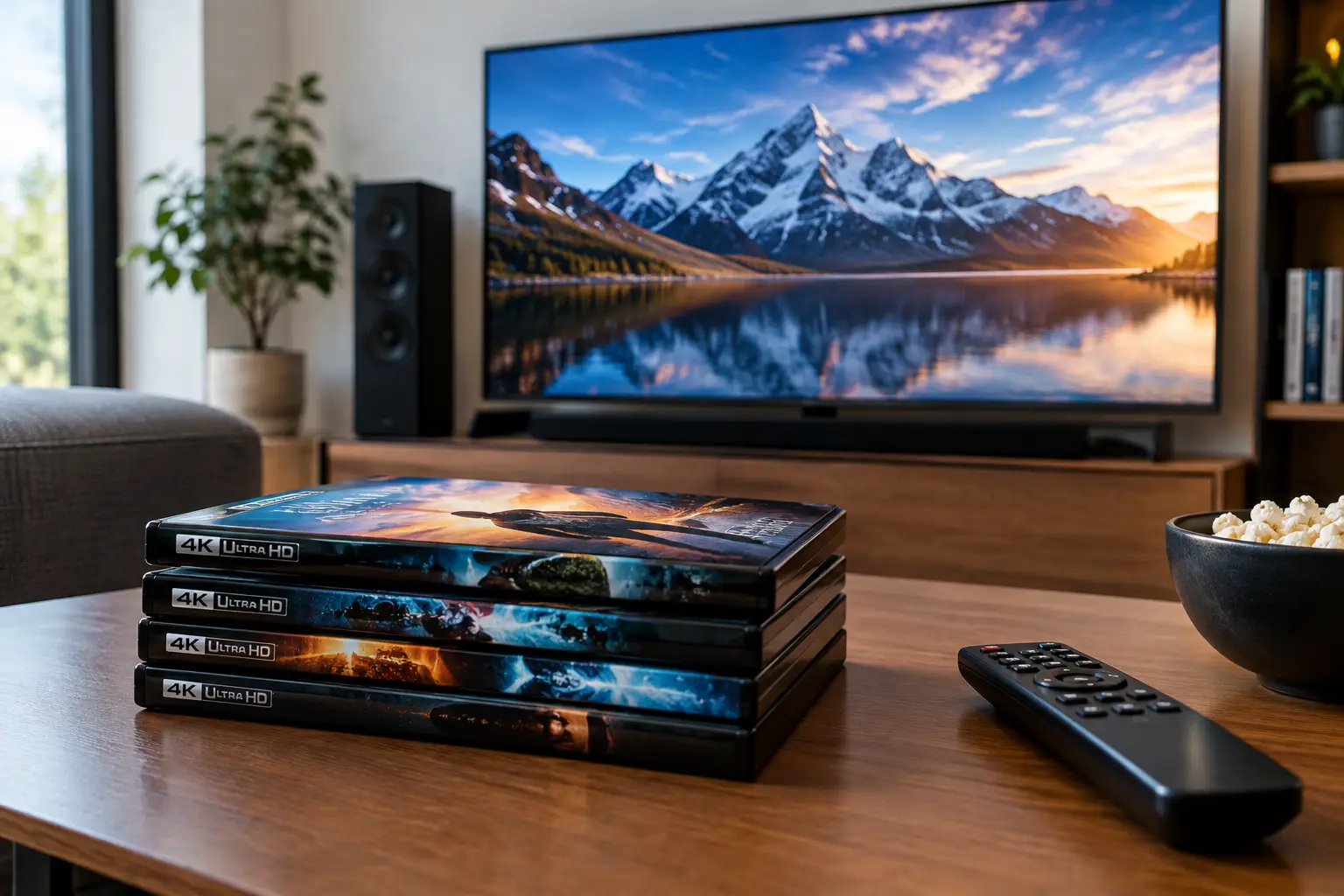
A 4K collection should not look like a pile of disconnected app purchases. For serious viewers, the best platforms for 4K movie collectors combine dependable access, high-bitrate playback, accurate HDR, broad device support, and a library that still feels like it belongs to you.
That last point separates casual streaming from collecting. A rotating subscription catalog is convenient, but it is not a permanent library. Titles disappear, versions change, 4K availability varies by device, and the movie you planned to watch can move behind another paywall. Collectors need a smarter setup: one that protects quality while making a large library fast to browse and easy to play.
What a Real 4K Movie Platform Must Deliver
The 4K badge alone proves very little. A low-bitrate stream can carry a 4K label and still show banding in dark scenes, soft detail during motion, or compressed grain in older films. The best experience depends on the entire chain: source quality, HDR format, audio track, network capacity, playback device, and display calibration.
For collectors, prioritize four things. First, look for the version you actually want: theatrical cut, director’s cut, restored edition, or a release with the original lossless audio. Second, verify playback support for HDR10, Dolby Vision, Dolby Atmos, DTS, and high frame-rate content where applicable. Third, consider access risk. Cloud purchases are convenient, but they are licensed access, not the same as owning a disc or maintaining your own permitted media archive. Finally, demand device flexibility. Your collection should play reliably on a living-room TV, streaming stick, mobile device, and desktop without constant format friction.
Best Platforms for 4K Movie Collectors: The Main Choices
There is no single winner for every collector. The right platform depends on whether you value maximum image quality, instant digital access, a curated premium ecosystem, or control over a personal media library.
Ultra HD Blu-ray: Best for maximum quality and permanence
Ultra HD Blu-ray remains the benchmark for people who notice compression. A good 4K disc commonly delivers far more bitrate than mainstream streaming, preserving fine texture, complex shadow detail, and demanding action scenes. It can also include premium audio tracks that many streaming services either compress or do not offer.
The trade-off is physical storage, player hardware, and occasional disc availability. You need a capable 4K Blu-ray player, shelf space, and patience when a title has not received a proper UHD release. But for favorite films, reference discs, and movies with spectacular cinematography or sound design, physical media is still the strongest foundation a collector can own.
Kaleidescape: Best premium digital movie experience
Kaleidescape is built for high-end home theaters. Its model is different from ordinary streaming: users buy films and download them to local movie servers for premium playback. That approach reduces dependence on fluctuating internet conditions and offers quality that is designed to satisfy projector rooms, large OLED displays, and serious surround-sound systems.
Its interface, metadata, and home-theater integration are excellent. So is its focus on quality. The limiting factor is price. Hardware requires a significant upfront investment, and purchases cost more than typical digital storefront sales. It makes sense for collectors who have already invested heavily in a dedicated theater and want a polished, appliance-like system rather than a DIY media stack.
Apple TV and Movies Anywhere: Best for simple digital access
For many US buyers, Apple TV is one of the cleanest ways to build a cloud-based 4K library. Its storefront frequently offers 4K upgrades at no additional charge for eligible purchases, and its device ecosystem is polished on Apple TV 4K hardware. Movies Anywhere adds major value by connecting supported purchases from participating retailers into one shared locker.
This is an excellent convenience layer, especially for sale-priced movies and spontaneous purchases. Still, collectors should understand the limits. Not every studio participates, not every title includes every premium format, and digital rights can change. Treat it as a convenient digital catalog rather than the sole archive for movies that matter most to you.
Fandango at Home: Best for catalog depth and digital deals
Fandango at Home, formerly Vudu, remains a strong digital store for collectors who want broad catalog access and frequent promotions. It is particularly useful for older studio titles, bundles, and films that may not receive much attention on subscription services. Supported titles can offer 4K UHD, HDR, and higher-quality audio, depending on the release and device.
Its biggest advantage is selection. Its biggest compromise is the same one facing every cloud locker: playback quality and format support can vary across television apps, streaming devices, and individual titles. Check the version details before buying, especially if Dolby Vision or Atmos is part of your buying decision.
Jellyfin: Best for control over a personal media library
Jellyfin is a powerful choice for collectors who want to organize and stream media they legally own or are authorized to access. Instead of handing library organization to a storefront, you control your files, artwork, metadata, collections, user accounts, and playback rules. With the right server, network, and client device, a Jellyfin library can deliver high-bitrate 4K playback across the home and, where lawful and properly configured, remotely.
This option offers the closest thing to a personal streaming universe. It is ideal for collectors with large libraries, mixed content types, multiple rooms, and viewers who want one searchable interface instead of a dozen apps. The trade-off is technical responsibility. Direct play requires compatible devices, while transcoding 4K HDR can demand serious server hardware and careful configuration.
For viewers who want a managed, large-scale media-server experience rather than building one from scratch, a provider such as PrimeHub.Live can reduce the infrastructure burden with a hosted Jellyfin environment and broad device access. Before choosing any hosted service, confirm content authorization, privacy practices, supported apps, stream limits, and the quality tier promised for 4K titles.
Why Subscription Streaming Is Not Enough for Collectors
Netflix, Max, Disney+, and similar services are valuable discovery tools. They can deliver excellent originals, convenient family viewing, and occasional impressive 4K streams. But they operate on rotating licensing windows, not collector logic. A title can be available one month, gone the next, and return later in a different quality tier.
Subscription services also tend to prioritize convenience over complete editions. Extras, commentary tracks, alternate cuts, and lossless audio are often missing. If your goal is simply finding something to watch, that may be fine. If your goal is building a library around favorite directors, franchises, genres, and reference-quality films, subscriptions should support your collection rather than replace it.
Build a Hybrid Setup Instead of Chasing One Perfect Service
The highest-value setup is usually hybrid. Keep your must-own films on Ultra HD Blu-ray, especially titles where visual detail and audio matter. Use a digital locker such as Apple TV and Movies Anywhere for everyday convenience and sale purchases. Then organize eligible personal media through Jellyfin if you want one centralized library across multiple devices.
Your network matters as much as the app. Wired Ethernet is the safest choice for high-bitrate 4K playback. Strong Wi-Fi can work well, but crowded networks, weak signal coverage, and low-end streaming sticks create the buffering problems people often blame on the platform. A capable TV box, an HDMI chain that supports the formats you use, and enough server or internet bandwidth will protect the experience.
Also plan for redundancy. Digital storefronts are convenient, but favorite titles deserve a backup strategy. Keep discs for the movies you never want to lose. Maintain accurate metadata and storage backups for any personal library. This is less glamorous than buying another display upgrade, but it is what turns a large watchlist into a durable collection.
Choose for the Screen You Own and the Way You Watch
A collector with a 77-inch OLED, an Atmos system, and a dedicated movie room should prioritize discs, Kaleidescape, or high-bitrate direct play from a properly configured personal server. A household that watches across Fire TV, mobile devices, and several rooms may get more value from a strong digital locker plus a media server designed for broad compatibility.
The right platform is the one that makes movie night immediate without reducing a great film to a compromised stream. Build around the titles you care about, protect the quality your screen can reveal, and make sure your library is still there when the subscription carousel moves on.
Leave a Reply